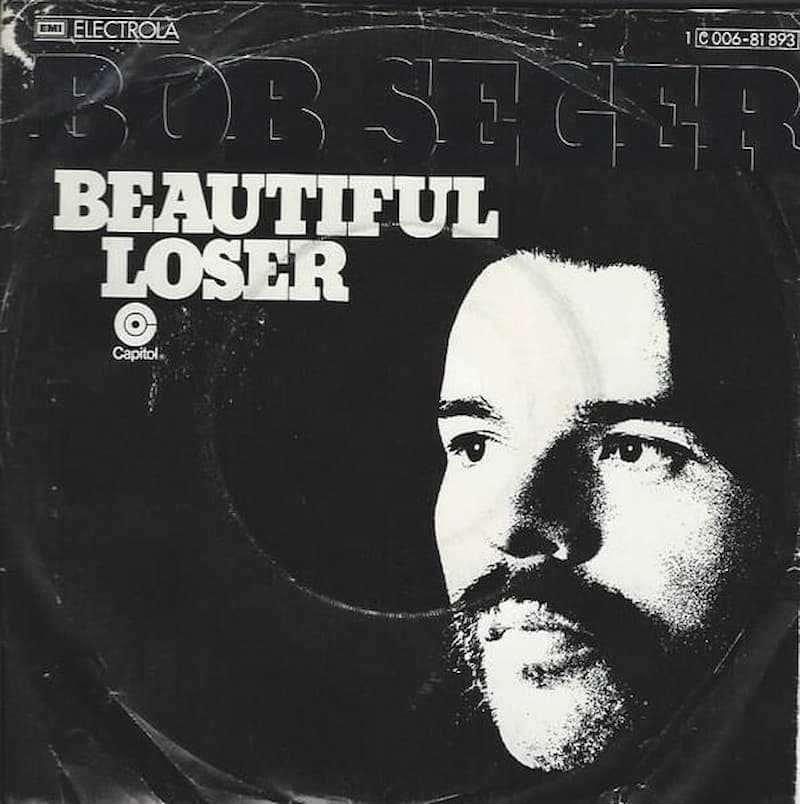
About The Song
“Beautiful Loser” opened Bob Seger’s 1975 album of the same name and served as its lead single, a compact, mid-tempo reflection on ambition and limits that arrived just before his national breakthrough. Issued by Capitol in 1975 with “Fine Memory” on the B-side, the song set the album’s tone: unflashy, sturdy, and emotionally direct, the kind of cut that reads even bigger on stage than on the radio.
The studio version runs about 3:26 (trimmed to roughly 3:14 for the single edit) and features Seger in close-up over the Muscle Shoals Rhythm Section’s unfussy pocket. Credited as co-producers with Seger, the Shoals crew keep everything dry and present—piano and guitars trading small phrases, bass and drums locked to the lyric’s pulse. It’s Side One, Track One on the LP for a reason: the arrangement introduces the album’s feel in under four minutes and then gets out of the way.
As for meaning, Seger has long said the title and core idea sprang from Leonard Cohen’s novel Beautiful Losers. Despite common assumptions, he wasn’t writing about himself; he was aiming at a familiar type—the underachiever who lowers the bar to avoid disappointment. The concept took time to land. He’s recalled drafting multiple versions over nearly a year before the final shape clicked, even playing an early version for friend Glenn Frey as a gut check on tone and direction.
On release, “Beautiful Loser” didn’t quite crack the Hot 100, peaking at No. 3 on Billboard’s Bubbling Under chart (effectively No. 103). Trade press still heard a hit: Cash Box tagged it a “country-rocker” with “super hot production and rhythm,” sounding every bit like the sort of record that could sneak from album-rock playlists onto pop rotation. That combination of craft and restraint would soon pay off in a bigger way.
Part of the song’s long life is album context. Beautiful Loser marked Seger’s return to Capitol and leaned heavily on Muscle Shoals players, with the Silver Bullet Band stepping in on select tracks. The LP itself became a slow-burner, peaking at No. 131 in the U.S. but sharpening the sonic identity Seger would ride for the rest of the decade: lean arrangements, conversational vocals, and lyrics that feel lived-in rather than posed.
The definitive turn came onstage. On 1976’s Live Bullet, recorded in Detroit, Seger pairs “Beautiful Loser” directly with “Travelin’ Man,” no pause between them, and the medley becomes an FM staple. In that setting the song reveals its real engine: the band’s pocket widens, the chorus lands like a vow, and the crowd answers on cue. Many listeners first fell for the tune in that form—and never separated the two again.
Heard now, “Beautiful Loser” sits at the hinge of Seger’s story: the last deep breath before the sprint of Night Moves and arena-scale success. It’s modest in scale, sure of its craft, and plainspoken in a way that makes it feel true the first time you hear it. That’s why it endures—on classic-rock playlists, in set lists, and in the lives of anyone who’s ever measured their reach against what really matters.
Video
Lyric
He wants to dream like a young man
With the wisdom of an old man
He wants his home and security
He wants to live like a sailor at sea
Beautiful loser
Where you gonna fall?
When you realize
You just can’t have it all
He’s your oldest and your best friend
If you need him, he’ll be there again
He’s always willing to be second-best
A perfect lodger, a perfect guest
Beautiful loser
Read it on the wall
And realize
You just can’t have it all
You just can’t have it all
You just can’t have it all
Oh, oh, can’t have it all
You can try, you can try
But you can’t have it all
Oh yeah
He’ll never make any enemies, enemies, no
He won’t complain if he’s caught in a freeze
He’ll always ask, he’ll always say please
Beautiful loser
Never take it all
‘Cause it’s easier
And faster when you fall
You just don’t need it all
You just don’t need it all
You just don’t need it all
Just don’t need it all